
Items and warehouse structure
Organize item masters, groups, units of measure, attributes, price records, warehouse hierarchies, and access around the company’s physical and operational model.
Coordinate items, warehouses, receipts, deliveries, transfers, replenishment, batches, serial numbers, counts, and stock reporting in one bilingual operational record.
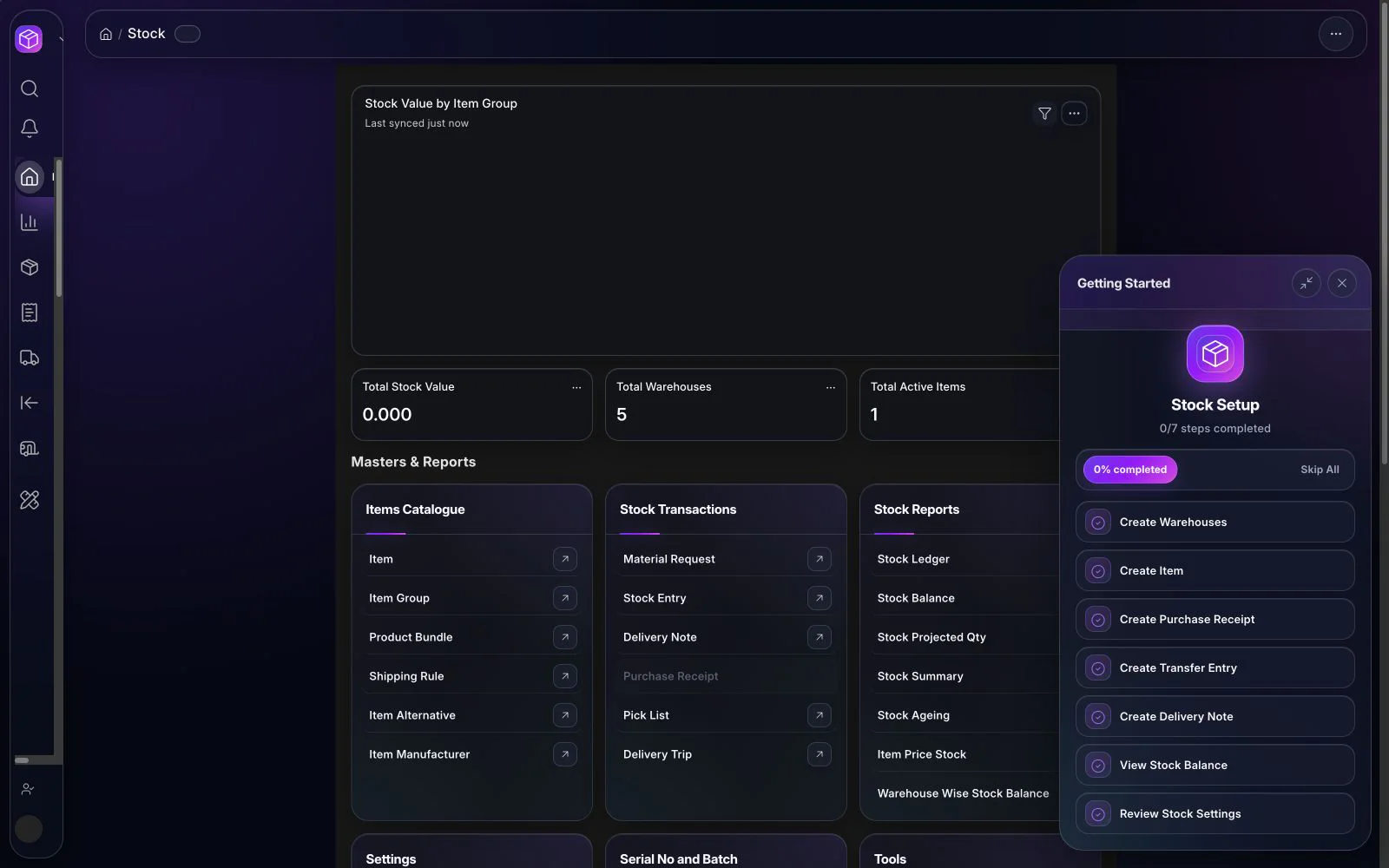
BITEX connects warehouse activity to purchasing, sales, manufacturing, quality, and accounting context so teams can understand what moved, where it moved, and which document created the movement.
Organize item masters, groups, units of measure, attributes, price records, warehouse hierarchies, and access around the company’s physical and operational model.
Record purchase receipts, delivery notes, stock entries, material requests, pick lists, transfers, and adjustments with references to the responsible transaction.
Review stock balance and projected quantity, define item-level reorder settings, and prepare material requests when configured thresholds and planning rules require action.
Track selected items by batch or serial number, review traceability and ledger records, and monitor batch expiry information where those controls are configured.
Maintain stock-ledger context, review item valuation, allocate landed costs, and reconcile physical counts to system quantities under the company’s approved accounting policy.
Use balance, ledger, projected quantity, ageing, shortage, warehouse-capacity, reorder, and batch or serial reports to investigate exceptions and plan work.
Explore the verified BITEX workspaces that create demand, receive supply, consume materials, inspect goods, and record the financial effect.
Items, warehouses, movements, replenishment, batches, serial numbers, valuation context, and reports.
Supplier orders, purchase receipts, quality checks, invoices, and incoming-stock context.
Orders, picking, deliveries, returns, invoicing, and outgoing-stock context.
Material planning, bills of materials, work orders, consumption, and finished-goods receipts.
Stock valuation context, landed costs, invoices, ledgers, and financial reporting.
A successful rollout starts with warehouse design, clean item masters, documented movement rules, approved valuation settings, tested integrations, and a reconciled opening count.
Document companies, locations, warehouse hierarchy, item groups, units, ownership, transaction types, approvals, replenishment rules, and required reports.
Prepare item and warehouse masters, define batch or serial controls only where needed, configure roles and stock settings, and remove duplicate or obsolete records.
Load the approved master-data scope and opening positions, complete a controlled count, investigate differences, and reconcile quantities and values before acceptance.
Test representative receipts, transfers, production movements, deliveries, returns, adjustments, and reports; train users by role and launch with documented exception handling.
Clear answers to help you evaluate fit, scope, and the next step.
Evaluate item and warehouse structure, movement controls, projected availability, replenishment, batch and serial traceability, valuation, counts, reporting, permissions, Arabic and English use, migration, and connections to purchasing, sales, manufacturing, and accounting.
Yes. BITEX supports configurable warehouse structures and movements between locations. The final hierarchy, access rules, transfer process, and reporting design are defined during implementation.
Configured item reorder levels and planning inputs can support material-request preparation. Useful results depend on accurate lead times, reorder quantities, warehouse settings, demand signals, and disciplined transaction entry.
Yes. Batch and serial controls can be enabled for selected items, with related ledgers and traceability views. The control should be applied where the operational benefit justifies the added scanning and data-entry discipline.
BITEX maintains stock-ledger and valuation context based on the configured company and item settings. The selected approach, opening values, landed costs, adjustments, and accounting impact must be reviewed and reconciled against the company’s approved policy.
First clean item and warehouse masters, freeze an approved cutover point, count physical stock, map batches and serial numbers where required, load opening quantities and values, and reconcile the result before normal transactions begin.
Tell us your priorities and we’ll prepare a focused walkthrough for your operations, teams, and requirements.