
Bills of materials and operations
Define multi-level product structures, quantities, scrap assumptions, operations, routings, workstations, operation times, and cost inputs for controlled production versions.
Connect bills of materials, routings, production plans, work orders, shop-floor activity, material movements, quality checks, subcontracting, and cost visibility in one bilingual operational system.
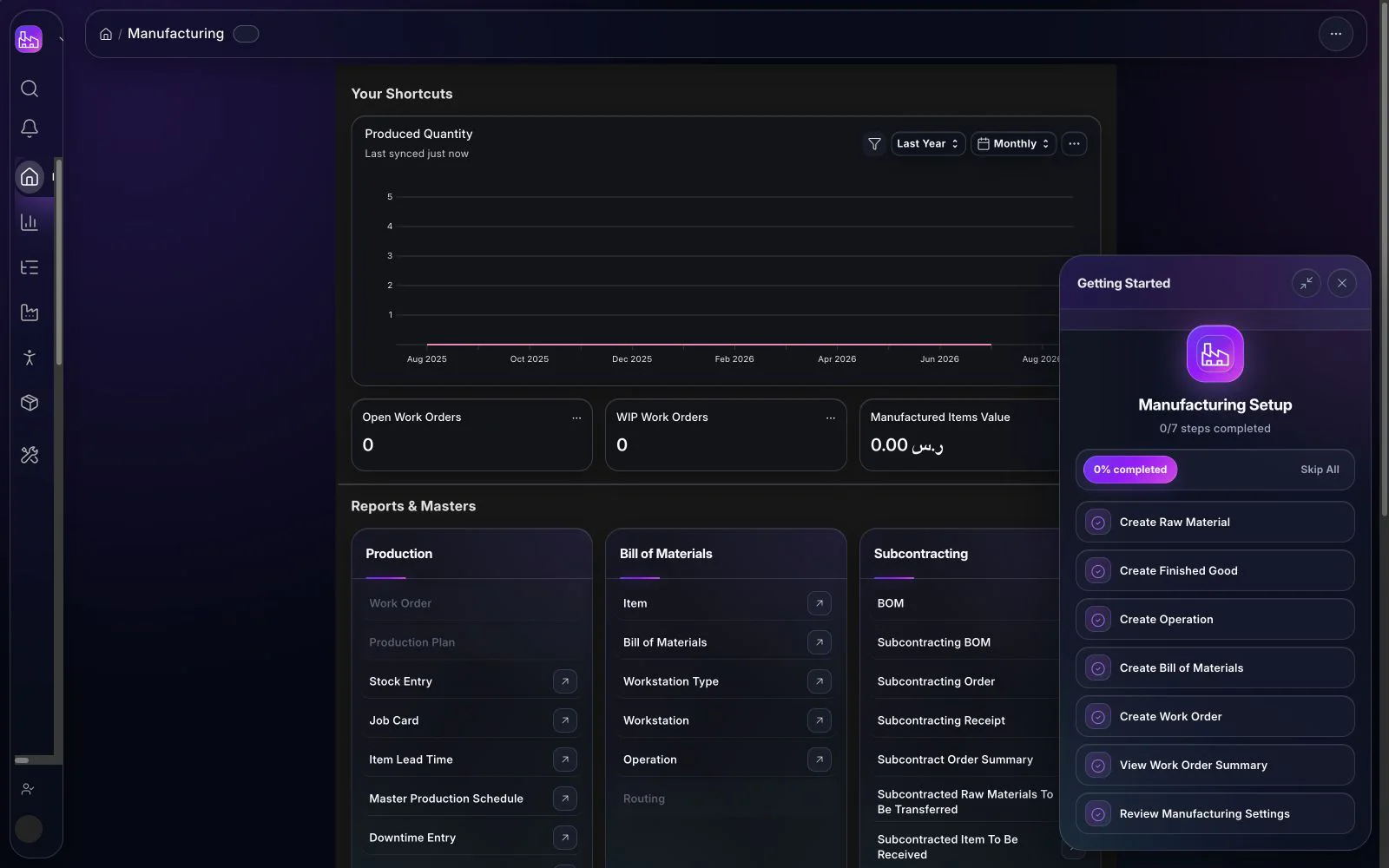
BITEX keeps product structures, materials, capacity, execution records, quality evidence, stock movements, and accounting context connected so teams can plan work and investigate variance from the source documents.
Define multi-level product structures, quantities, scrap assumptions, operations, routings, workstations, operation times, and cost inputs for controlled production versions.
Use production plans and material-requirement views to translate approved demand into required finished goods, subassemblies, raw materials, and proposed supply actions.
Release work orders against approved BOMs, schedule operations, record job-card activity, monitor progress, and preserve references between planned work and actual execution.
Connect material transfer and consumption, work-in-process context, completed quantities, scrap, and finished-goods receipt to the relevant warehouses and production documents.
Coordinate inspection requirements and exceptions with production, and connect approved outside-processing flows to subcontracting orders, supplied materials, and receipts.
Review BOM cost estimates, material and operation inputs, work-order consumption, production analytics, downtime, quality summaries, and variance reports for investigation and improvement.
Explore the verified BITEX workspaces that supply materials, execute production, control quality, and account for physical movements.
BOMs, operations, routings, production plans, work orders, job cards, workstations, and reports.
Raw-material, work-in-process, scrap, transfer, and finished-goods movement context.
Inspection criteria, readings, outcomes, exceptions, and quality summaries connected to operations.
Material requests, supplier sourcing, orders, receipts, and incoming supply for production.
Outside-processing BOMs, orders, supplied raw materials, receipts, and status reporting.
A dependable rollout validates product structures, units, warehouses, operation standards, capacity, material movements, quality gates, costing assumptions, permissions, and representative exception scenarios.
Document finished goods, subassemblies, raw materials, alternate paths, operations, workstations, warehouses, lead times, quality points, subcontracting, and required reports.
Prepare items, units, BOM versions, routings, workstations, operation costs, calendars, stock settings, roles, and planning parameters under named ownership.
Test demand, planning, supply proposals, work-order release, material issue, job cards, partial completion, scrap, rework, quality exceptions, cancellation, and finished-goods receipt.
Compare planned and actual quantities, times, movements, and cost context; accept reports, train users by role, and launch with documented controls and review routines.
Clear answers to help you evaluate fit, scope, and the next step.
Evaluate BOM version control, production and material planning, routings, workstations, work orders, job cards, stock movements, quality, subcontracting, costing, reports, permissions, bilingual use, migration, and the discipline required on the shop floor.
BITEX supports bills of materials with components and operations, including product structures that use subassemblies, plus routings, operations, workstations, and related update or comparison tools. The final design and version-control procedure are defined during implementation.
Configured production plans can consolidate demand and calculate product and material requirements. Approved requirements can then support work orders and material requests. Useful output depends on maintained demand dates, BOMs, stock records, lead times, and planning settings.
Job cards can record operation-level execution against work orders, including time and completed quantity context. The capture method, devices, permissions, and exception process should be tested with actual shop-floor roles.
BITEX provides BOM, material, operation, workstation, stock, and work-order cost context. The result still depends on approved accounting policy, accurate rates and time records, configured valuation, disciplined transactions, and reconciled treatment of scrap, rework, overhead, and variances.
Yes. BITEX provides connected workspaces for Manufacturing, Inventory & Stock, Quality Management, Purchasing & Procurement, Subcontracting, and Accounting & Finance. The specific controls and hand-offs are confirmed in the implementation scope.
Tell us your priorities and we’ll prepare a focused walkthrough for your operations, teams, and requirements.