Do You Think Artificial Intelligence Is Expensive?
When business leaders hear the term “artificial intelligence,” they may imagine major projects, complicated infrastructure, large technical teams, and extremely high budgets. Today, however, the reality is significantly different.
AI technology has become accessible to companies of different sizes. An organization can begin with one focused solution that addresses a clear operational problem and expand gradually as the business value becomes visible.
AI Is Not Only About Replacing Manual Work
In many cases, the objective is not to replace employees. It is to help them work faster, reduce avoidable mistakes, and dedicate more time to activities that require experience, communication, creativity, and decision-making.
Where Do Working Hours Go Inside a Company?
In many organizations, employees spend a considerable part of their working day on repetitive tasks that do not always require direct human judgment. Each task may appear small, but together they consume valuable time and increase operating costs.
Data Entry
Moving information manually between systems, spreadsheets, and databases.
Repeated Inquiries
Responding repeatedly to similar questions from customers or employees.
Report Preparation
Collecting, organizing, and formatting business information regularly.
Document Review
Checking fields, records, and supporting documents manually.
Approval Follow-Up
Sending approval requests, reminders, and status updates.
Information Search
Finding files, records, and answers across disconnected sources.
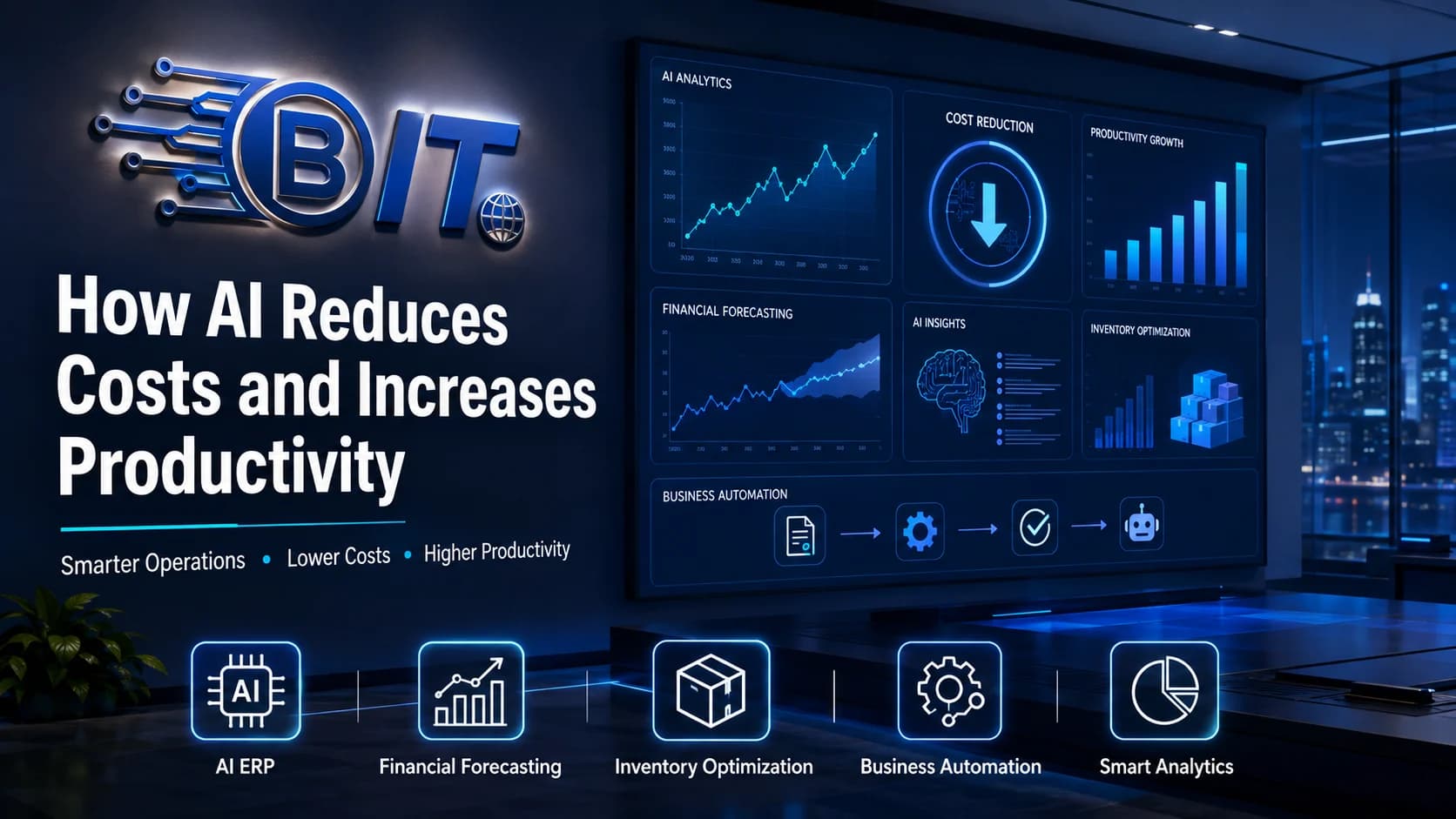
How Does Artificial Intelligence Help Reduce Costs?
1. Automating Repetitive Tasks
AI can support routine activities such as processing requests, preparing reports, sending notifications, and following workflow steps. Every activity completed automatically can reduce manual effort and accelerate delivery.
2. Reducing Human Error
Intelligent systems can help validate information, identify inconsistencies, and alert users before a problem develops into financial loss, operational delay, or expensive rework.
3. Improving Resource Utilization
Companies can automate selected activities and help their existing teams manage a greater volume of work efficiently instead of increasing resources with every rise in workload.
The Goal Is to Increase Employee Capacity
When intelligent systems handle repetitive activities, employees can concentrate on work that requires experience, judgment, creativity, customer communication, and strategic thinking. This is where automation becomes a genuine productivity driver rather than only a time-saving tool.
Artificial Intelligence Across Different Departments
Sales
- Analyzing sales opportunities.
- Identifying customers who may be more likely to purchase.
- Supporting lead follow-up.
- Assisting with quotation preparation.
- Analyzing sales team performance.
Customer Service
- Responding to repeated questions.
- Classifying incoming requests.
- Supporting complaint follow-up.
- Analyzing customer satisfaction.
- Suggesting suitable responses for different cases.
Human Resources
- Supporting résumé screening.
- Analyzing employee data.
- Supporting performance monitoring.
- Automating leave-request workflows.
- Supporting recruitment and training activities.
Finance
- Supporting invoice review.
- Forecasting cash-flow patterns.
- Analyzing expenses.
- Identifying unusual transactions.
- Preparing financial reports more efficiently.
Project Management
- Tracking task progress.
- Identifying early signs of delay.
- Supporting resource allocation.
- Analyzing project risks.
- Preparing management performance reports.
Operations
- Following operational procedures.
- Sending alerts and reminders.
- Processing recurring requests.
- Supporting data-driven decisions.
- Reducing dependence on manual follow-up.
What About Small and Medium-Sized Businesses?
A common misconception is that artificial intelligence is suitable only for large enterprises. In reality, small and medium-sized businesses can benefit significantly from focused AI solutions, particularly when they need to grow without increasing expenses at the same rate.
How Should a Company Start an AI Project?
The strongest AI projects begin with a clearly defined business problem—not with the technology itself. Start by identifying where the organization is losing time, effort, quality, or operational visibility.
Identify the Operational Problem
Look for repetitive, slow, manual, or error-prone activities.
Review Existing Data and Systems
Understand where information is stored and how it moves between departments.
Select a Focused Use Case
Begin with a clear project that can be tested without unnecessary scope.
Implement, Test, and Improve
Monitor performance, gather user feedback, and improve the solution gradually.
- Does report preparation take too much time?
- Is the customer service team under continuous pressure?
- Do important processes depend on manual data entry?
- Are operational errors repeated regularly?
What Makes an AI Project Successful?
Artificial intelligence should not be viewed as a one-time implementation. It is an ongoing development journey that evolves as the organization grows, its data improves, and its operational needs change.
How Does BI Technology Help Companies Get More Value from AI?
At BI Technology, we believe that successful artificial intelligence solutions begin with understanding the business before writing a single line of code. We work with organizations to analyze existing processes, identify meaningful automation opportunities, and develop customized solutions designed to improve performance and productivity.
Our goal is to transform artificial intelligence from a complex concept into a practical business tool that supports sustainable growth and stronger operational performance.
Frequently Asked Questions
Do small businesses need a large budget to begin using AI?
Not necessarily. A company can begin with one focused use case that addresses a clear problem, then expand based on the results and demonstrated business value.
Does artificial intelligence mean replacing employees?
In many projects, the objective is to reduce repetitive work and help employees focus on activities that require experience, judgment, creativity, and communication.
Which process should a company automate first?
A strong first candidate is usually a process that occurs frequently, consumes measurable time, follows clear steps, and produces results that can be evaluated.
Can AI integrate with existing systems?
Custom AI solutions can be designed to work with existing systems depending on the organization’s technical environment, available data, and operational requirements.
How can the success of an AI project be measured?
Success can be evaluated through indicators such as time saved, fewer errors, faster processes, improved service quality, and the team’s ability to manage a greater workload.
Conclusion
Artificial intelligence is no longer only a technology trend. It has become a strategic business capability that can help organizations improve performance, reduce costs, accelerate decision-making, and deliver better services.
Companies that begin investing thoughtfully in artificial intelligence and business automation will be better prepared to accomplish more with their resources, respond faster to change, and build a sustainable competitive advantage without compromising quality or customer experience.
Ready to Identify Automation Opportunities in Your Company?
Start by examining the operations that consume the most time and identifying where artificial intelligence could improve efficiency, reduce manual effort, and support better business decisions. BI Technology helps transform operational requirements into practical, scalable AI solutions.
Request an AI Solutions ConsultationPublishing note: Replace this URL with the approved English contact, consultation, or demo page when available.

BITEX Editorial Team
ERP product and operations specialistsThe BITEX Editorial Team turns verified product knowledge and Saudi operating experience into practical guidance for finance and operations leaders.